Japanese A5 Wagyu Miyazaki Block Cut New York Strip

Cut thicker for easier cooking!
Origin: 🇯🇵 Japan
Prefecture: Mixed Prefectures
Marbling Score: BMS 11+
Weight Range: 8-9oz
Quantity: 1 Steak
CHOOSE SIZE:

Description

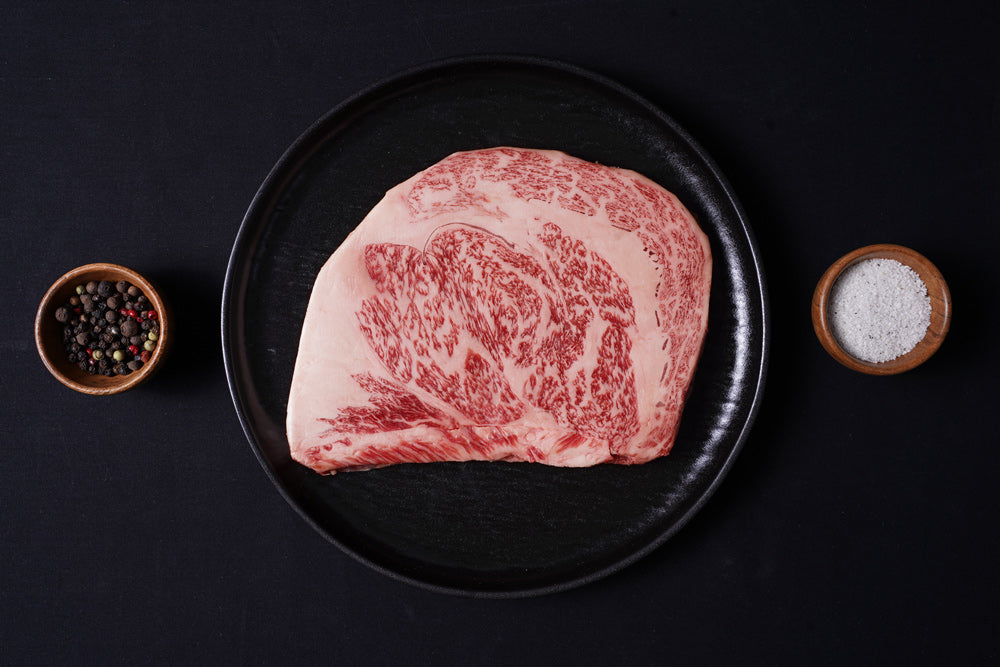
The New York Strip is one of the most technically interesting cuts on the steer — firm enough to hold a hard sear, with intramuscular fat that keeps it juicy and a fat cap that bastes the meat as it cooks. Apply A5 Japanese Wagyu grading at BMS 11+ to that equation and the cut behaves differently: marbling so dense it reads as pattern rather than veining, a melt point that sits below body temperature, and flavor intensity that means an 8–9oz portion satisfies in ways a 16oz Choice strip can't.

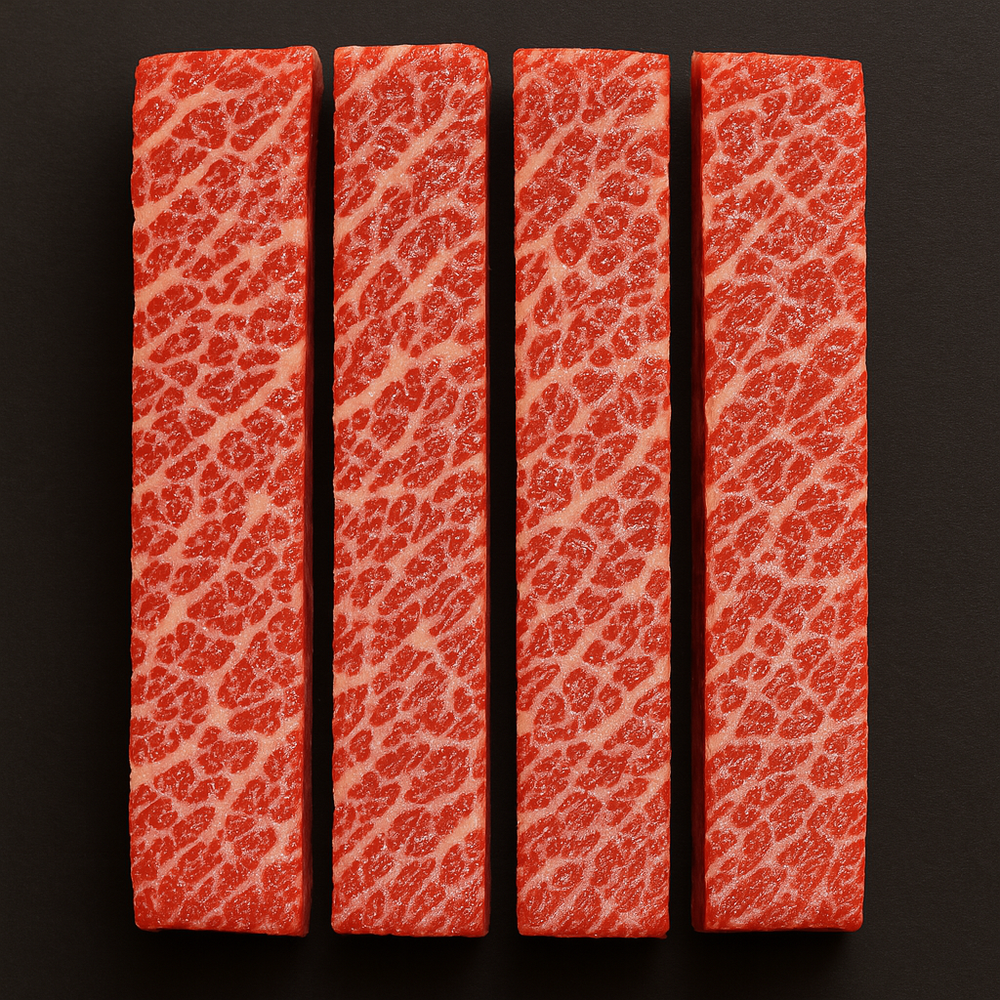
Most A5 New York Strip sold in the US is sliced thin — half-inch, three-quarter at best — because Japan portions for restaurant menus, not American home cooks. The result is a $130 steak that overcooks before the fat renders. Our Block Cut is the opposite. We had our supplier leave the strip in a 2"-thick block — 8–9oz, one portion, four sides to sear, fat that renders all the way through the muscle instead of off the edges.

Why Miyazaki: Miyazaki Prefecture has won Japan's national Wagyu competition — the Zenkoku Wagyu Noryoku Kyoshinkai, informally the Wagyu Olympics — four times, including three consecutive overall championships in 2007, 2012, and 2017. That's a record no other prefecture has matched in the competition's 60-year history. The prefecture sits on the southern island of Kyushu, where humid sub-tropical conditions and mountainous interior elevation slow the cattle's growth and are widely credited with the dense, finely distributed intramuscular fat development Miyagyu is known for.

Why BMS 11+: The Japanese Beef Marbling Standard runs 1 to 12. Most A5 sold in the US tops out at BMS 9. BMS 11 is the second-highest score possible and threads the strip's lean, dense longissimus dorsi muscle finely enough to break the firm texture without losing the steak's structural presence. You still get a steak with bite — not a slab of fat.

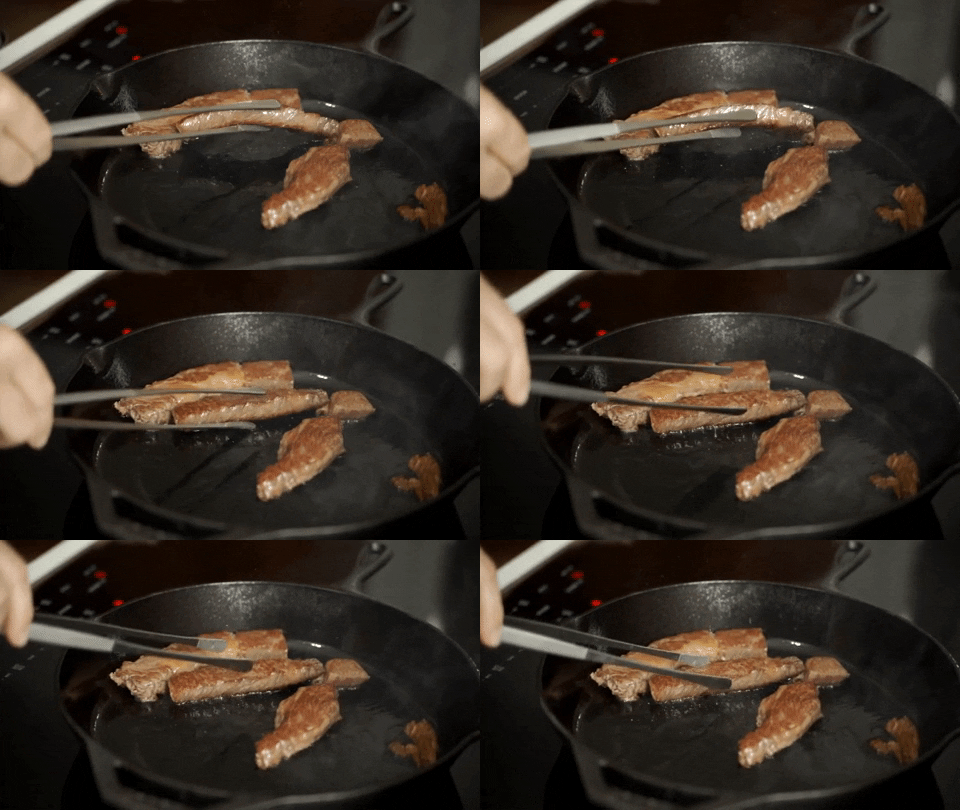
How to cook it: Pull from fridge 45 minutes before cooking. Salt heavy. Cast iron, blazing hot, sear all four sides — 60 seconds per side. Rest 5 minutes. Slice across the short axis to plate as round medallions of marbled cross-section. The cap renders fast at this BMS — pull early, don't push past medium-rare.

Specs:

  • Origin: Miyazaki Prefecture, Japan
  • Grade: A5 — Japan's highest, verified by the Japan Meat Grading Association (JMGA)
  • BMS: 11+ (second-highest possible on the 1–12 Japanese Beef Marbling Standard)
  • Weight: 8–9oz
  • Format: 2"-thick block, one steak per portion
  • Quantity: 1 Steak

Every order ships with a Certificate of Authenticity bearing the individual cow's nose print — Japan's lot-level traceability system. Wagyu noses are like fingerprints, no two alike, and every Wagyu animal in Japan is registered at birth with a 10-digit ID tied to that nose print. The cert that ships with your steak is not generic — it traces to the actual animal.

Free shipping over $195. Arrives perfect or replaced free.

Why We Love It

Here's what most people don't know about A5 Wagyu and the New York Strip specifically: the strip is a leaner cut by conventional standards. On a USDA Prime American steer, it's noticeably firmer and less marbled than the ribeye. But when you take that same cut from a Japanese Wagyu animal that has achieved A5 grading — meaning it scored a BMS (Beef Marbling Score) of 8 or higher out of 12 — the strip transforms into something almost paradoxical: structured and tender at the same time. You get the clean, minerally beefiness the strip is known for, amplified through fat that melts rather than chews.

The block cut format here matters. Rather than being sliced from a pre-portioned roast with compression and oxidation already working against it, a block-cut strip is portioned closer to the time it reaches you, preserving the integrity of the marbling and the surface of the meat. This is how Japanese Wagyu is traditionally sold at high-end butcher counters in Tokyo — cut to order from the block. Less handling, better surface, more honest product.

A5 Certification: Graded by the Japan Meat Grading Association — not a marketing term, an actual third-party score

The Strip Advantage: More structural integrity than a ribeye means you can actually develop a proper crust without the steak falling apart under its own fat content

Flavor Profile: Deep umami, rich dairy-like sweetness from the oleic-acid-heavy fat, with a clean finish the ribeye doesn't always deliver

Block Cut: Portioned fresh, not pressed or compressed — the marbling pattern stays intact

What makes thE MEATERY different?

The Meatery stands out by combining tradition with innovation. Our butchers bring decades of expertise, carefully preparing each cut to perfection. From rare heritage breeds to custom aging techniques, we go the extra mile to bring you unique flavors and textures you won’t find elsewhere. Plus, our commitment to transparency means you always know the story behind your food.

How should I cook it?

The Golden Rule: Less Heat Than You Think

A5 Wagyu fat has a significantly lower melt point than conventional beef fat — it starts rendering around body temperature. That's the science behind why it feels like it dissolves in your mouth. The flip side is that it also means high, prolonged heat is the enemy. You want a fast, hard sear and a quick finish. This is a steak that rewards restraint.

Recommended Method: Cast Iron, No Oil

Bring to room temp: Pull the steak from the fridge 20–30 minutes before cooking. With a cut this marbled, cold center = uneven cook.

Dry the surface: Pat completely dry with paper towels. Moisture is the enemy of crust development.

Season simply: Flaky sea salt only. Pepper can burn at the heat you're using. Add pepper after if you want it.

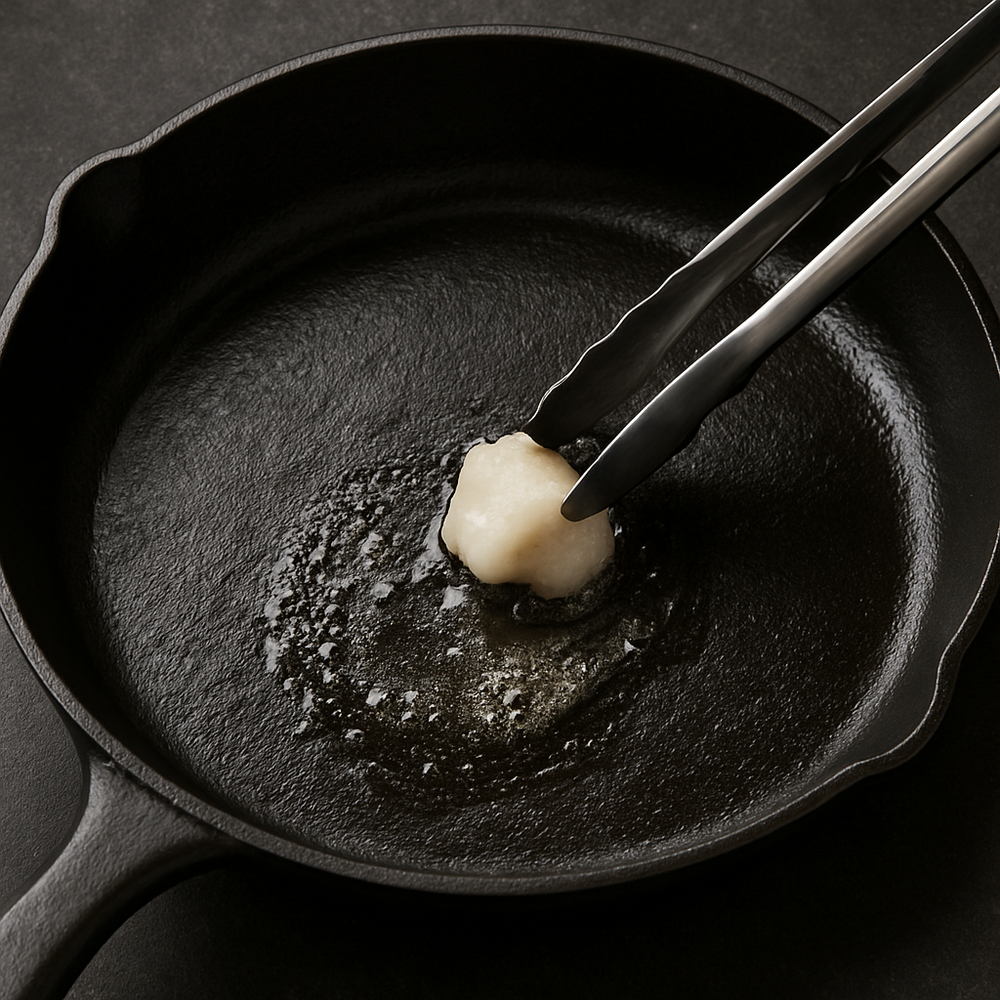
No added oil: Preheat your cast iron over medium-high until just smoking, then render a small corner of the steak's outer fat cap directly on the pan for 20–30 seconds. That's your cooking fat. A5 Wagyu is its own oil.

Sear: 60–90 seconds per side for an 8–10oz strip. You're targeting medium-rare to medium (130–135°F internal) — unlike leaner cuts, A5 Wagyu is actually more pleasant slightly above medium-rare because the fat needs just a little more time to fully render. Under 125°F and the fat can feel waxy.

No basting needed: The fat cap does this naturally. Skip the butter bath — you'd be gilding the lily and muddying the flavor.

Rest: 3–5 minutes, loosely tented. Don't skip this.

Alternative: Teppanyaki-Style (Highly Recommended)

If you have a flat griddle or teppan, this is the most authentic way to cook A5 strip at home. Medium heat, no oil, slice the steak into ½-inch strips before cooking — this is how it's done in Japan, and it maximizes the surface-to-fat ratio. Each piece gets its own sear. Serve immediately, piece by piece, with a dot of wasabi and soy.

What to Avoid

Do not grill over open flame — the fat drip will flare and char the exterior before the interior reaches temp

Do not cook past medium — above 145°F, the fat fully renders out and you lose the texture that justifies the price

Do not use a nonstick pan — you won't get the crust development you need

Stack Your Box Like a Pro

This product is a showstopper—but it’s even better with:

Japanese A5 Wagyu Miyazaki Block Cut New York Strip

as seen on:

Japanese A5 Wagyu | Kobe Wine Beef | Ribeye I BMS 12 | 15-16oz - The Meatery

Japanese A5 Wagyu: A Must-Try, exquisite experience

Japanese A5 Wagyu is a bucket list item every foodie needs to experience at least once.

Incredibly marbled, "cut-it-with-a-spoon" tender and FULL of umami flavor it is an experience unlike any other.

"In Japan, A5 Wagyu is referred to as a 'holiday steak.' The Japanese enjoy it infrequently, in a celebratory setting.

When customers walk into our store seeking this level of experience, I advise them two main things: 1...share this experience with someone, and 2...a little bit goes a LONG way. The average male only consumes 4-6oz of A5 Wagyu due to its intense richness."

- Nick

Intense Marbling
Great for Sharing
just a pinch of salt

we really, really care about our customers

Nick's favorite quote is "I didn't grow this business losing customers."

We take a lot of pride in being old school in our approach with customers, and our reviews show it.

san diego's #1 Ranked Butcher Shop

In just 5 short years we have become San Diego's highest-ranked Butcher Shop on Google Maps.

When you buy from us, you are buying from a real business with a brick & mortar presence...not just a faceless distribution facility.

package protection for your comfort

At checkout, you have the option to purchase inexpensive package protection that covers a comprehensive list of issues that could happen in any shipped order, such as porch pirates, delays by the carriers, thawed meat, etc.

We've got you covered!
NICK'S TRICK FOR COOKING A5 WAGYU (IT'S REALLY EASY)

Step 1: Cut Wagyu into Strips

I always tell customers if you're worried about cooking A5 Wagyu, the easiest way to do it is to cut it into two-finger-wide strips and cook one strip at a time while you build your confidence.

This works best on Ribeyes and New York Strips, but can also work on Denver steaks.
Step 2: Heat & Grease Cast Iron Pan

Preheat your cast-iron pan to medium-high heat.

If you have a small piece of fat, you can run it over the cast-iron pan to grease it. I do not recommend using any external greasing agent, such as butter or oil, as it adds a different flavor.
Step 3: Sear on Cast Iron Pan

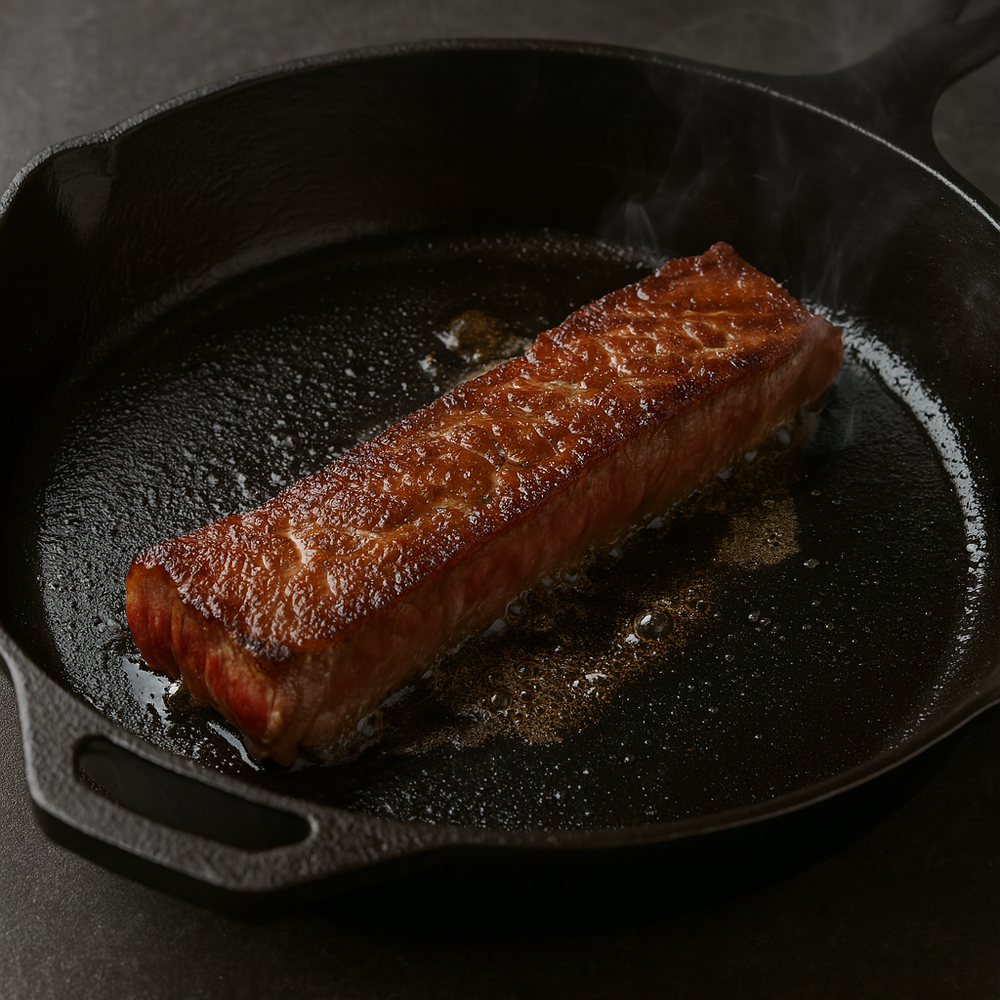
Cast iron pans have a really cool way of grabbing the meat and releasing it when the crust has been properly applied. This process takes about 45 seconds to a minute per side.

Cook your first piece and eyeball it, and give it a try. Make your adjustments from there. Trust me, even if it's a little overcooked, it's still going to be incredibly delicious. And don't forget to put a really great salt on it.

Japanese A5 Wagyu | Certified Kobe Beef | Ribeye I BMS 12 | 10-12oz - The Meatery

frequently asked questions

How is the meat shipped?

The Meatery ships orders via 2nd Day Express Air, typically using UPS. They ship on Mondays, Tuesdays, and Wednesdays to ensure weekday delivery. Orders are packed in sturdy cooler boxes with gel packs and dry ice to maintain freshness. While the meat usually arrives frozen, some thawing is normal and it can be safely refrozen.

Where does The Meatery source its meat?

The Meatery goes to great lengths to source only the highest quality proteins from the most reputable, humane suppliers from around the world. We partner with trusted farms and suppliers who follow strict quality, hygiene, and ethical standards. This commitment ensures that all of our meat, including their premium Wagyu selections, is of the highest possible quality and has lived a humane, clean life prior to harvest.

What is The Meatery's return policy?

Due to the perishable nature of their products, The Meatery generally does not accept returns unless there is a problem with the order.

You're covered, though! During the checkout process you can choose to elect SavedBy Package Protection and be covered against theft, thawing, lost packages, quality issues, etc.

What is the 100% Freshness Guarantee?

The 100% Freshness Guarantee ensures your order arrives safely and in optimal condition. The meat is processed in a USDA-approved facility, vacuum-sealed, and shipped in sturdy cooler boxes with gel packs and dry ice. If your meat does not arrive cold to the touch or you believe its quality is compromised, please reach out to us and we will replace it immediately.

Does The Meatery offer local delivery or pickup?

Yes, The Meatery offers local pickup at our storefront in San Diego.

Simply select "Pickup in Store" during checkout (shipping options) and head on down!

How can I contact The Meatery for support?

For support, you're always welcome to email us for assistance with any questions or issues regarding your order.
hello@themeatery.com